
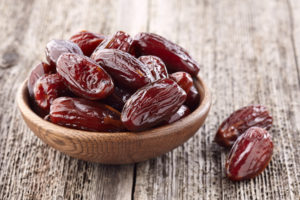
A hundred grams of fresh dates runs about 250 kilocalories, and roughly two-thirds of that weight is carbohydrate — mostly glucose, fructose and sucrose in a form your body absorbs fast. That's the whole mechanism behind "natural energy booster": no additives, just fruit sugar the body already knows how to use.
Dried dates concentrate further, closer to 300 kilocalories per 100g, with around 2g of protein, 0.6g of fat, and a real mineral spread — roughly 650mg potassium, 65mg magnesium, 70mg calcium, 50mg phosphorus and 2mg iron per 100g. Fresh or dried, the sugar content does the same job; drying just packs more of it into the same bite.
That's why endurance athletes lean on them. A runner or swimmer training for two hours burns through glycogen steadily, and a few dates thirty minutes before a session top up blood sugar without the stomach weight of a full meal. Buy a Kedai Kurma Selangor that turns over stock fast and you get fresher fruit — softer texture, less of that dried-out chew that puts people off eating enough of them before a workout.
Compare it to a can of soda: 100g of dates versus 100g of table sugar is roughly 250 kcal against 400 kcal for the same weight, so energy from eating dates comes with fibre and minerals riding along, not just empty sweetness. That fibre — call it 1.5–2g per 100g — is also why dates fill you up faster than a spoonful of sugar would; you stop eating before you've matched the calories.
None of this makes dates a supplement or a cure for anything — they're just a dense, unprocessed carbohydrate source, which is exactly what "quick energy" means nutritionally. If you're building a pre-workout snack list, our Healthy Foods category has more whole-food options, our Kedai Kurma page lists where to buy fresh stock locally, and the Contact Us page is the fastest way to ask about bulk pricing.