
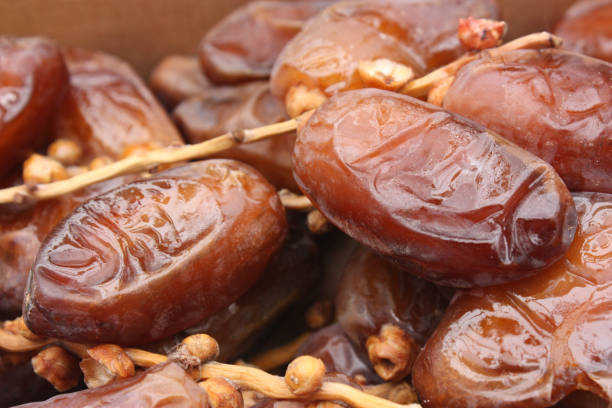
Search for "Kurma Tangkai" and you'll get two different answers depending on who you ask. Here's what the term actually means, and what makes these Tunisian dates worth knowing about.
What "kurma tangkai" actually means
The term covers two things depending on context. Sometimes it names a specific date variety grown in Tunisia, one with its own distinct look and flavour. More often, though, "kurma tangkai" is just a general Malay term for Tunisian dates sold still attached to their stalks — "tangkai" means stem. Selling dates on the stem is a Tunisian packaging tradition: it keeps the fruit undisturbed until it's opened, and buyers use the stem as a rough freshness check.
What sets them apart
Flavour
These dates are sweet with a honey note, but less cloying than a Medjool or an Ajwa. That makes them a good pick for anyone who finds other date varieties too sweet.
Texture
Texture depends on ripeness. Fully ripe, they're soft and chewy; picked slightly younger, they have a firmer bite that softens as you chew.
Appearance
The stem-on presentation is the giveaway — dates sold this way arrive with their natural stalks still attached. The named variety itself tends to be medium-sized with an amber colour.
What's in a kurma tangkai
Like other date varieties, kurma tangkai is mostly natural sugar with a useful amount of fibre, plus potassium, magnesium, and some antioxidant compounds. That's a fairly standard nutrient profile for dried dates generally. This is general nutrition information, not medical advice — because dates are sugar-dense, portion size matters if you're watching your sugar intake for any reason.
How to eat them
Straight from the pack is the simplest way to taste what makes the variety distinct. Beyond that, they chop well into trail mix or a salad for a chewy, sweet contrast, they take a stuffing of nuts or soft cheese for a quick starter, and they bake into cookies, muffins, or bread the same way any other date does.
Where to buy and how to store them
Middle Eastern and specialty grocers are the most reliable source, followed by online date retailers; farmers markets carry them only when a Tunisian vendor happens to be selling in season. Once you have them, an airtight container in a cool, dry place keeps them for weeks, and the fridge extends that to several months.
For current stock and bulk pricing on Medjool and other Tunisian-style varieties, see our Medjool wholesale supplier guide, or start from our home page for the full range.