
This article is general information, not medical advice. If you think you have anemia, see your doctor for a blood test.
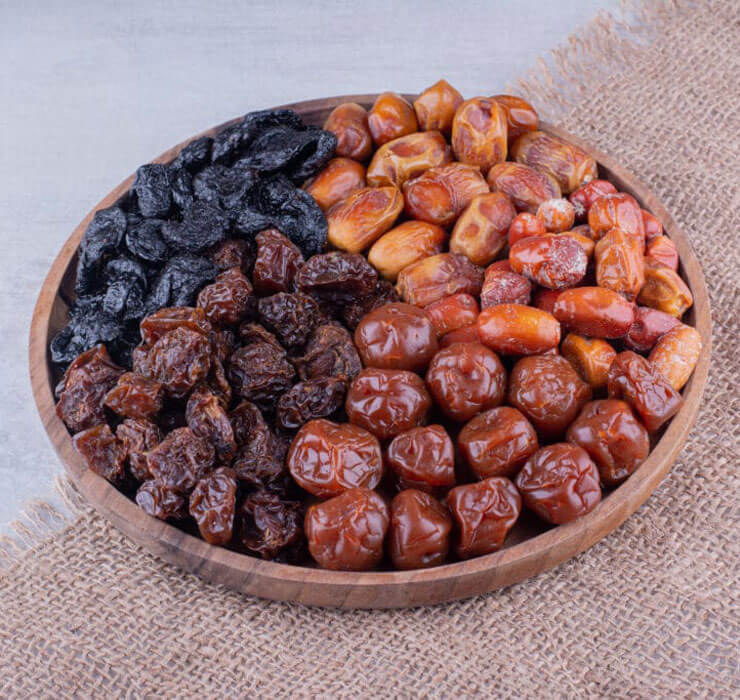
Dates come in several varieties (jenis kurma), and their iron content differs from one type to the next. This post looks at what the numbers actually say, without turning a food into a treatment.
Iron in the diet, briefly
The body needs iron to make red blood cells, which carry oxygen (NHS). Iron from meat, poultry and seafood is absorbed more easily than iron from plants such as legumes, leafy greens and dates. A 2010 review puts iron absorption at 14–18% from mixed diets and 5–12% from vegetarian diets. Anyone with ongoing fatigue, pale skin, or shortness of breath should get checked by a doctor rather than self-treat with diet alone. These are common symptoms of iron deficiency anemia, which is treated with iron tablets as well as iron-rich food (NHS).
Iron content by date variety
USDA lab figures per 100 g: Medjool has 0.9 mg iron (USDA 168191) and Deglet Noor 1.02 mg (USDA 171726). Women aged 19 to 49 need 14.8 mg a day and men 8.7 mg (NHS), so 100 g of dates, about four Medjool, gives a woman roughly 6% of her daily iron. Mineral content does differ between varieties: a 2015 analysis of 12 Saudi cultivars, Ajwa among them, found significant differences in total minerals. We have not found a reliable lab comparison of iron in Ajwa or Barni, so we do not rank them. Our guide to the best types of dates for baking and desserts compares the common varieties by taste and texture instead. Dates are a food, not a substitute for medication a doctor has prescribed.
What dates actually add to a meal
Dates bring fibre, potassium, natural sugars, and a small amount of iron. They have almost no vitamin C: 0 mg in Medjool and 0.4 mg in Deglet Noor per 100 g. Vitamin C and meat in the same meal raise iron absorption in single-meal studies, though the effect is smaller across a varied diet (Hurrell and Egli). So if you cook dates with lentils or spinach, add a vitamin C food such as tomato, lime or capsicum. Our ideas for dates in savory dishes are a place to start. That's a reasonable case for adding dates to a varied diet — not a case for treating anemia with dates alone.
What the anemia studies show
The evidence is thin. In a 2019 Iranian study, 31 schoolgirls with iron deficiency anemia ate dates for two months, and their average hemoglobin rose from 11.19 to 12.05 g/dL. There was no control group, so we cannot tell how much of that was the dates. A 2021 review of 10 studies in pregnant women found hemoglobin went up with dates in all but one, but most of the women had mild anemia. Neither shows that dates can replace the treatment a doctor prescribes.
References
- NHS: Iron (vitamins and minerals); Iron deficiency anaemia.
- USDA FoodData Central: Dates, medjool (168191); Dates, deglet noor (171726).
- Hurrell R, Egli I. Iron bioavailability and dietary reference values. Am J Clin Nutr. 2010;91(5):1461S-1467S. PubMed 20200263
- Hamad I, et al. Metabolic analysis of various date palm fruit (Phoenix dactylifera L.) cultivars from Saudi Arabia to assess their nutritional quality. Molecules. 2015;20(8):13620-41. PubMed 26225946
- Irandegani F, et al. The effect of a date consumption-based nutritional program on iron deficiency anemia in primary school girls aged 8 to 10 years old in Zahedan (Iran). Pediatric Health Med Ther. 2019;10:183-188. PubMed 31908568
- Saputri RD, et al. Date palm (Phoenix dactylifera) consumption as a nutrition source for mild anemia. Gac Sanit. 2021;35 Suppl 2:S271-S274. PubMed 34929829