
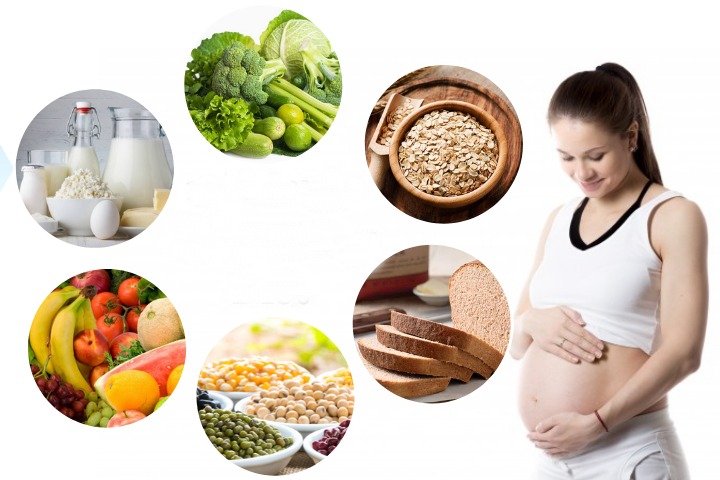
Pregnancy comes with a long list of advice, from prenatal vitamins to gentle exercise, and dates often turn up on it. Safawi, the dark Madinah date sold by Safawi Dates Supplier, is a sweet, fibre-rich fruit that many mothers-to-be enjoy. Here is what dates contain and what studies in pregnant and breastfeeding women have actually found, so you can decide how they fit into your diet.
This is general information, not medical advice. Every pregnancy is different, so check with your doctor or midwife before changing your diet, especially if you have gestational diabetes.
What dates contain
Safawi comes from the Madinah region of Saudi Arabia. It is longer than Ajwa, dark brown to black, soft and chewy (our Kurma Safawi guide has more). Shops also carry other premium dates, but USDA FoodData Central only lists Medjool and Deglet Noor, so the figures below are per 100 g of those two (Medjool, Deglet Noor). 100 g is about four Medjool.
- Folate: 15 µg in Medjool and 19 µg in Deglet Noor. That is very little. The NHS advises 400 micrograms of folic acid a day as a supplement from before you conceive until 12 weeks, because it is hard to get enough from food (NHS).
- Iron: 0.9 mg in Medjool and about 1 mg in Deglet Noor. You need iron to make red blood cells for you and your baby, and your levels are checked at your booking appointment and at around 28 weeks (NHS). Iron deficiency anaemia is often caused by pregnancy and is treated with iron tablets and iron-rich foods (NHS). Dates alone won't prevent it. Our post on dates, iron and anaemia goes into the numbers.
- Fibre: 6.7 g in Medjool and 8 g in Deglet Noor. Hormonal changes can make you constipated early in pregnancy, and the NHS suggests high-fibre foods, including fruit, plus exercise and plenty of water (NHS). Dried fruit counts towards your 5 a day (NHS).
- Sugar: 66.5 g in Medjool and 63.4 g in Deglet Noor. That makes dates a quick source of energy, and a sugary one. Feeling tired is common in pregnancy, especially in the first 12 weeks, because of hormonal changes (NHS). Gestational diabetes, high blood sugar that develops in pregnancy, is more common in the second and third trimester (NHS). If you have it, ask your diabetes team how dates fit your meal plan.
Magnesium, beta-carotene and other claims
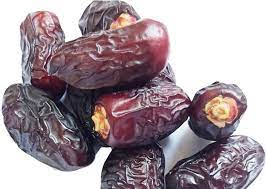
You may read that the magnesium in dates relaxes muscles and eases the aches of pregnancy, and that their beta-carotene stops skin drying out and itching. Medjool has 54 mg of magnesium per 100 g (USDA). Women need 270 mg a day, and the NHS says magnesium helps turn food into energy (NHS). We found no study showing that dates ease aches or cramp in pregnancy. For cramp, the NHS suggests regular gentle exercise, ankle and foot movements, and pulling your toes hard up towards your ankle (NHS). Beta-carotene is low too: 89 µg in Medjool and 6 µg in Deglet Noor (USDA), and no study links dates to skin health in pregnancy. If itching or anything else worries you, the NHS says to mention it to your maternity team (NHS).
Dates, labour and breastfeeding: tradition and the studies
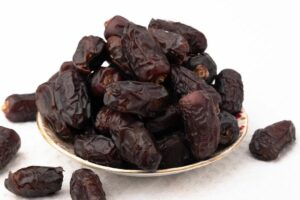
Dates have long been part of pregnancy customs in many cultures. Ajwa, the small, near-black, soft date from Madinah, is often said to strengthen the womb and prepare the body for birth, and Medjool, the large, very soft date that originated in Morocco, is said to help milk supply. Deglet Noor, golden and semi-dry, comes from Tunisia and Algeria. The beliefs are about dates in general. No study we found compared one variety with another.
The best-known labour study came from Jordan. 69 women ate six dates a day for the four weeks before their due date and 45 women ate none. The women who ate dates were more dilated when they arrived at hospital (3.52 cm against 2.02 cm), more of them went into labour on their own (96% against 79%), and fewer needed drugs to start or speed up labour (28% against 47%) (Al-Kuran et al., 2011). Women were not randomly assigned, and the authors called for a randomised trial. A 2024 review pooled 48 studies and found shorter labour and less induction, plus higher maternal haemoglobin when dates were eaten in the third trimester. The same review rated the overall evidence quality as unacceptable, found a high risk of bias in most studies, and noted that only four trials recorded safety (Salajegheh et al., 2024).
For breastfeeding, a Thai trial gave 25 mothers 10 dates a day for four weeks and compared them with 23 who ate none. Milk volume rose 23% from the start in the date group, but the babies' growth was no different (Modepeng et al., 2021). It is one small trial.
Ways to eat dates during pregnancy
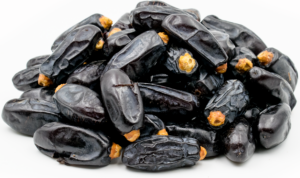
Pregnancy can bring strong cravings. If dates are one of yours, blend them into smoothies or yoghurt parfaits at breakfast, roll energy balls with chopped dates and nuts for a snack, or add a few to lentil soups and tagines for sweetness. Keep it to a few at a time, as they are high in sugar. There are more ideas in our post on dates for baking and desserts.
In short
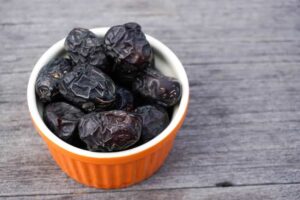
Dates are a pleasant, fibre-rich snack in pregnancy, and the labour studies are interesting, but they are small and of low quality. Dates don't replace folic acid, iron checks or your antenatal appointments. Enjoy them in sensible amounts, and talk to your midwife if you have gestational diabetes or are unsure.
References
- USDA FoodData Central. Dates, medjool (FDC 168191); Dates, deglet noor (FDC 171726)
- NHS. Vitamins, supplements and nutrition in pregnancy
- NHS. Common health problems in pregnancy
- NHS. Have a healthy diet in pregnancy
- NHS. Tiredness and sleep problems in pregnancy
- NHS. Iron deficiency anaemia
- NHS. Gestational diabetes
- NHS. Others (magnesium)
- Al-Kuran O et al. The effect of late pregnancy consumption of date fruit on labour and delivery. J Obstet Gynaecol. 2011;31(1):29-31. PMID 21280989
- Salajegheh Z et al. Is oral consumption of dates in the peripartum period effective and safe integrative care to facilitate childbirth and improve perinatal outcomes? BMC Pregnancy Childbirth. 2024;24(1):12. PMID 38166785
- Modepeng T et al. The effects of date fruit consumption on breast milk quantity and nutritional status of infants. Breastfeed Med. 2021;16(11):909-914. PMID 34252286