
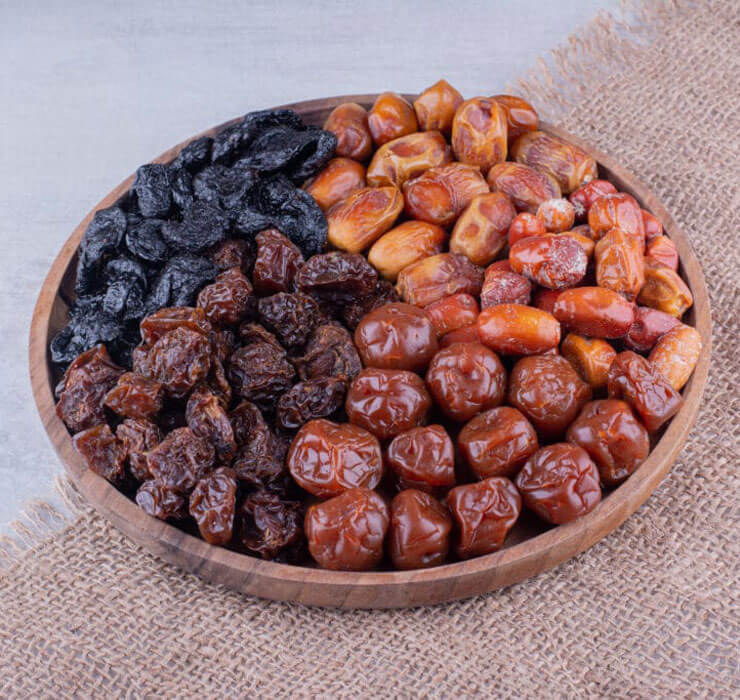
Dates come in several varieties (jenis kurma), and their iron content differs from one type to the next. This post looks at what the numbers actually say, without turning a food into a treatment.
Iron in the diet, briefly
The body needs iron to make red blood cells, which carry oxygen. Heme iron from meat, poultry and seafood absorbs easily; non-heme iron from plants — legumes, leafy greens, and dates among them — absorbs less efficiently on its own. Anyone with ongoing fatigue, pale skin, or shortness of breath should get checked by a doctor rather than self-treat with diet alone.
Iron content by date variety
Iron levels vary by variety, and none of them come close to red meat or a fortified cereal on their own. Ajwa and Barni dates test on the higher end among common varieties; Medjool, prized more for its size and texture, carries a smaller amount. Dates are a food, not a substitute for medication a doctor has prescribed.
What dates actually add to a meal
Dates bring fibre, potassium, natural sugars, and a small amount of iron and vitamin C. That vitamin C helps the body absorb non-heme iron a little better when eaten alongside iron-rich plant foods like spinach or lentils in the same meal. That's a reasonable case for adding dates to a varied diet — not a case for treating anemia with dates alone.